
Phantom Loads: Are all wall-warts the same?
The gadget that started this all off...
A friend passed along this URL to a group of us, mentioning that it'd be cool to have one of these: http://www.bikerumor.com/2011/11/08/review-fastmac-u-socket-usb-wall-outlet/#more-36894. A discussion was borne covering issues of safety, use, and if it really saved money. My instincts were that it would be safe, but wouldn't save you much money.
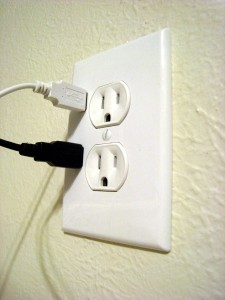
The conventional wisdom states that a wall-wart, or AC/DC power adapter, will draw electricity even if it's not powering or charging a device. This is generally true of any power-adapter that has a transformer in it. But what about modern switching power-supplies?
A comparison of power-adapters
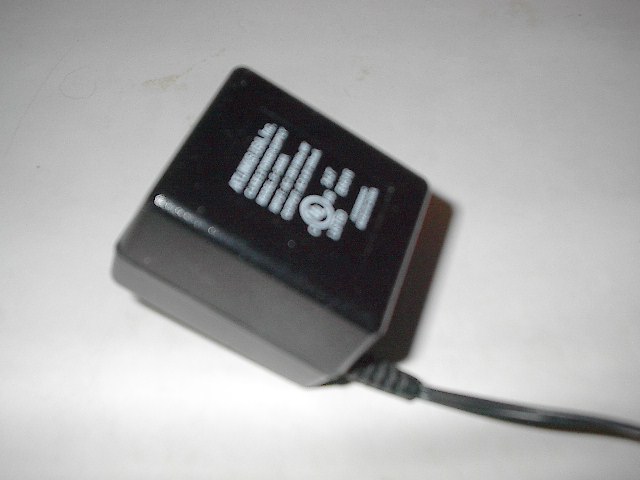
The AC/DC power adapter that we grew up with looks large and blocky like this one, it got warm when you plugged it in. That heat was a sign that it was consuming energy. You also needed to keep track of your adapters, since they were properly matched to the device they were intended for.
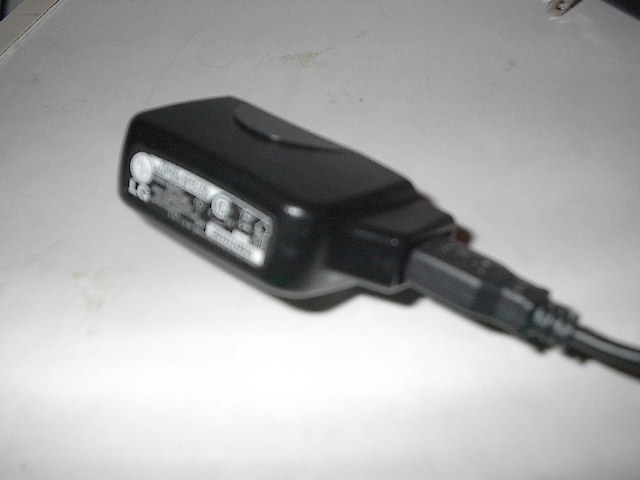
When cell-phones started to settle on using USB as both its data and charging interface things started to improve. There's still a bit of variety as some use mini, others use micro-A or micro-B. But now there are plenty of adapters that plug into the wall and have a standard type-A connector.
Measurements
As an example, I wanted to examine my cell phone's adapter. Using a digital clamp-meter and a modified extension cable (similar to the technique described in an earlier project) I tried to work out what this power-adapter consumed while it was plugged in without a phone attached, and with one charging.
I was happy to find that the device did not pull any measurable amps when the cell phone wasn't plugged in. So it had to be less than .005A or 0.61Watts or less. When it was plugged in, I measured that the wall was providing 122VAC and the device was consuming 0.01A or 1.2Watts while it was charging a cell-phone that was beeping out low-battery alerts.
What makes these new adapters work?
When I was a lad learning about electronics, power-supply circuits usually involved a step-down transformer to bring the 110VAC or so, down to something in the range that you needed for your circuit, then it would run it through a bridge rectifier to convert the AC to DC. Perhaps that would then feed into a regulator depending on how sensitive the rest of your device was. The modern power-supplies are switched-mode power supplies which I admit I'm not as familiar with. I first became aware of switched power supplies when they were in your PC (a good examination of your PC power supply is available .)
Switching power-supplies still use a transformer, but it's much smaller and as we've seen, consume much less power.
About that money savings...
The original gadget claims to save $20 per year, and it costs about $30. So according to the advertising you break even in 1.5 years if you don't count the cost of installation. If we assume that it's pulling 0.61Watts when there's no device connected (as opposed to 0 which we suspect) that would cost...
0.61 Watts * 24 hours / day * 365 days/year * 1 year = 5.35Kwh
I'm currently paying $0.0669/Kwh in generation fees so it will cost me about $0.36 if I leave the new-style plugged in constantly. Or about 55 years to meet that $20 of savings.
Considering that the wall-adapter has one of these built into it, it's cost of operation is about $0.36 annually.
Compared to the 6.6Watts used by a laptop power adapter which will cost you $3 to $4 for a year of operation.
Granted this falls into noise when compared to the operating costs of your refrigerator or other heavy electric appliances, but when you're considering off-grid operations, reducing these little bits of power-loss adds up to more operational time, or less gear that you have to carry with you.
- Log in to post comments